
I’m pretty sure one of the most common questions I hear as a game designer is “I think I’d like to try making a game… how do I start?”
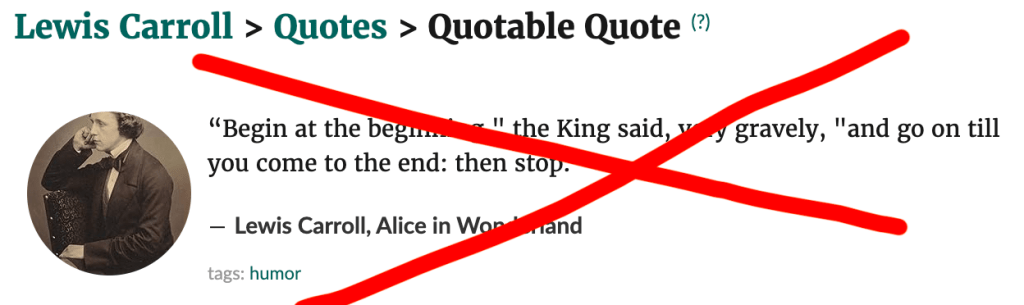
The most realistic answer, I think, is to actually start at the end. With all respects to Lewis Carroll, beginning at the beginning isn’t always the practical way to complete a nebulous task.
Frankly, it may be relevant to more than just game design, but we’ll stick to what I know for the sake of this advice. If you want to make a game, be it a tabletop board game, a trading card game, or even a video game (I would hazard a guess), you need to know what sort of experience you want players to have when it’s all done, produced, and delivered. Without that kind of goal, you’ll never know where to start.
If you go back to the very beginning of this blog, back when it was all about creating a game codenamed Disco Candybar, I talked about what I wanted the game to be:
Post #1: I want to make an adventure game my 10 year old can play and teach his friends.
Post #2: I want the game to be a simplified, streamlined take on adventure games I know I love.
Post #3: I want the action sequences to be fast, accessible, and fun.
And it goes on like that. Know your goals for what the finished game will be like from the starting point. Form a fairly specific idea for something you want to see exist; that’s the vision, and it’s where, as a designer, you want to land. It will inform every decision you make along the way, from components to pacing to mechanics and more, and when you run into roadblocks and challenges, it will help you focus on the best solutions quickly.
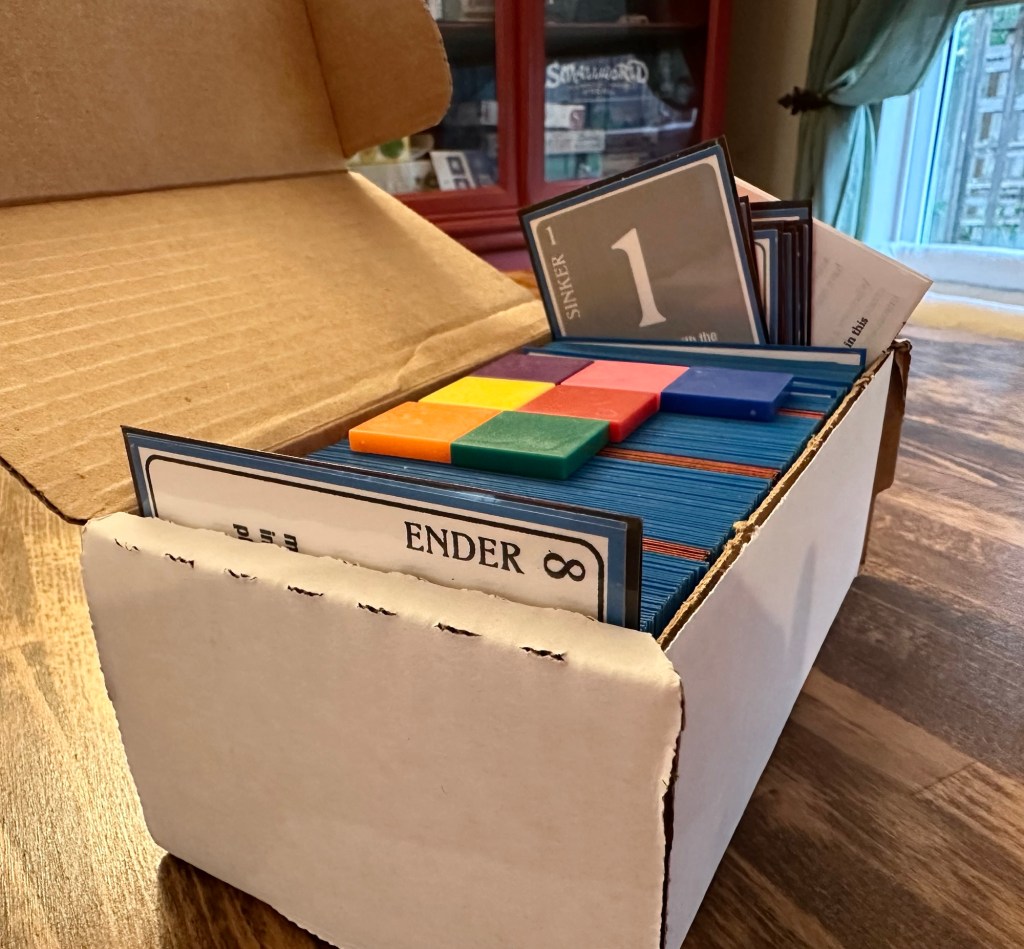
With my recent trading card game projects, I had a vision (or someone else’s vision shared with me) of what I wanted to achieve. Midway into the design process for both, it’s the end vision that keeps the compass pointing forward.
I mentioned yesterday that one of those TCGs originated with another designer, so apart from saying that I know beyond a shadow of a doubt that the lead designer had a strong vision and goals when he first started his project, I’m not going to tell his story here. The other project is still barely announced, and there are a small number of behind-the-scenes things keeping me from revealing too much, but as always, I’m forever eager to share the parts of the creative process that I can.
Co-designer Dave and I are working with a client, the creator of a narrative-focused IP, to make this trading card game. The client knew at the beginning that they wanted to see a game that plays quickly, with accessible strategy that had the potential to run deep enough to be continually engaging. (Yes, this is a pretty standard goal for TCG creators, but it’s still a fine place to set a target.) Because the IP is built on a richly written world, I also marked in another goal: I’d like to see the game built around the idea that players are achieving narrative goals from that world.
The trick to it all though has been twofold:
- While it’s got a good, consistently growing fanbase, not everyone knows the IP. The game and any injection of narrative goals need to not feel esoteric to anyone not already in that circle.
- Trading card games are, by nature, non-sequential and largely anachronistic. You can’t force a player to play out their characters and story points in the same order they happen in the IP. Even opening card packs, the players are inevitably going to see the cards in an order completely disconnected from the sequence of the IP’s linear narrative.
Well, with all the end goals and several mid-process challenges already established, I was finally able to start building the road that would get us to the finished product.
I feel good about the solution I’ve found for that second item above. I’m not going to reveal the details yet (please be patient; soon!), but I like what it does to give vignettes that feel like you’re working towards story goals throughout the game, regardless of the rest of the board state. We’re currently dialing in the pacing for those narrative beats, and once again, knowing what our end goals are 100% informs us of what is going to feel — and be — right for the game.
We know what kind of experience we ant the players to have with this game. We know the sights we want them to see on the way there. And from those, we knew where to start.
Bonus points to anyone who fast-forwarded to these last two paragraphs just so they could try starting at the end.
———
I’m going to do something I don’t typically do in this blog (I should have been doing this long ago), and that’s ask you to subscribe. It helps increase the overall visibility of DiscoCandybar.com, and in turn could help me land more contracts/work. End goals, you know? Thanks!
 DiscoCandybar.com
Leave a comment